Stairs & Railings
Custom Stairs and Railings in BC: Code, Materials, and Design
In BC, interior stair rises must be 125–200 mm, runs at least 255 mm, and guards on stairs at least 900 mm high with openings that won't pass a 100 mm sphere. Within those rules, material choice — white oak treads, steel stringers, glass or cable infill — drives the look and the budget.
A custom staircase is often the most photographed thing in a renovated home — and the most heavily code-regulated. Here's what matters before you sign a contract for stairs or railings anywhere in the Lower Mainland.
The BC building code basics
For interior residential stairs, the current BC Building Code requires:
- ·Rise: between 125 mm (5") and 200 mm (7-7/8")
- ·Run: at least 255 mm (10")
- ·Headroom: minimum 1.95 m (6'-5") measured vertically from the nosing
- ·Handrails: required on at least one side, between 865 mm and 965 mm high
- ·Guards (railings on open sides): 900 mm high on interior stairs, 1070 mm (42") on decks and landings more than 1.8 m above grade
- ·Guard openings: must not allow a 100 mm sphere to pass through
These numbers change occasionally — your contractor should be current.
Popular Lower Mainland stair builds
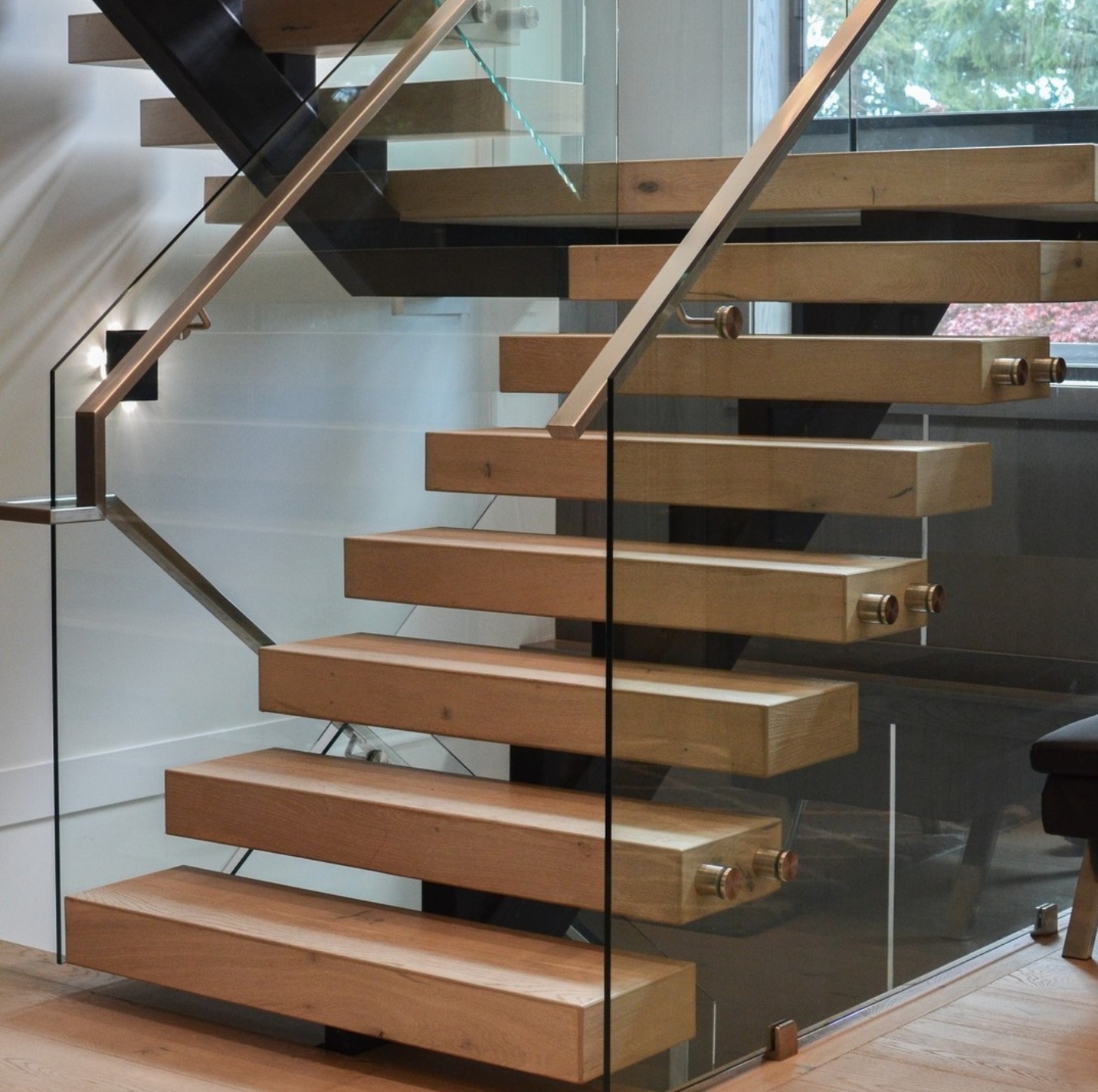
Mono-beam floating stairs. A single steel spine carries hardwood treads with open risers. Visually striking, structurally precise, and a centerpiece in modern Vancouver and West Vancouver homes.
Re-clad stairs. When the existing structure is sound, we replace just the visible treads, risers, and railing. Faster, less disruptive, often half the cost of a structural rebuild.
Traditional closed-stringer stairs. White oak treads, painted risers, square or turned newel posts, and a continuous handrail. Timeless and code-compliant in any heritage renovation.
Today's most-requested materials
- ·White oak treads — by a wide margin the most-requested species in 2025–2026.
- ·Walnut treads — for darker, richer interiors.
- ·Satin black iron pickets — replacing yesterday's brushed nickel as the standard upgrade.
- ·Low-iron tempered glass — for floating stairs and inlet-view homes.
- ·Cable railing — used carefully on decks; less common indoors due to code spacing.
Things to confirm in writing
- ·The exact rise/run before fabrication
- ·Tread species, thickness, and finish
- ·Railing material and post layout
- ·Whether nosings are square, rounded, or chamfered
- ·The lighting plan (concealed LED is now standard on premium builds)
- ·Final guard heights and code sign-off
Planning new stairs or a railing? Get a free quote — we'll measure, sketch, and walk you through the options.
Frequently Asked
Questions we get asked
What are the BC building code rules for stairs and railings?
BC requires interior stair risers between 125 mm and 200 mm, treads of at least 255 mm run, handrails 865–1070 mm above the nosing, and guards at least 900 mm high on stairs with openings that will not pass a 100 mm sphere. Always confirm current requirements with your local building department.
How much does a custom staircase cost in BC?
A refinished or re-clad staircase typically runs $8,000 to $20,000, while a fully custom open-tread or steel-stringer stair with glass guards often starts around $25,000 and climbs from there depending on span and materials.
Do I need a permit to replace a staircase?
Replacing treads, risers, or railings in the same configuration usually does not need a permit, but changing the stair opening, geometry, or structure normally does. Check with your municipality before demolition.
Which railing material is most popular right now?
Glass panel and thin-profile metal picket guards paired with white oak handrails are the most requested combinations in the Lower Mainland, with horizontal cable rail common on the North Shore.