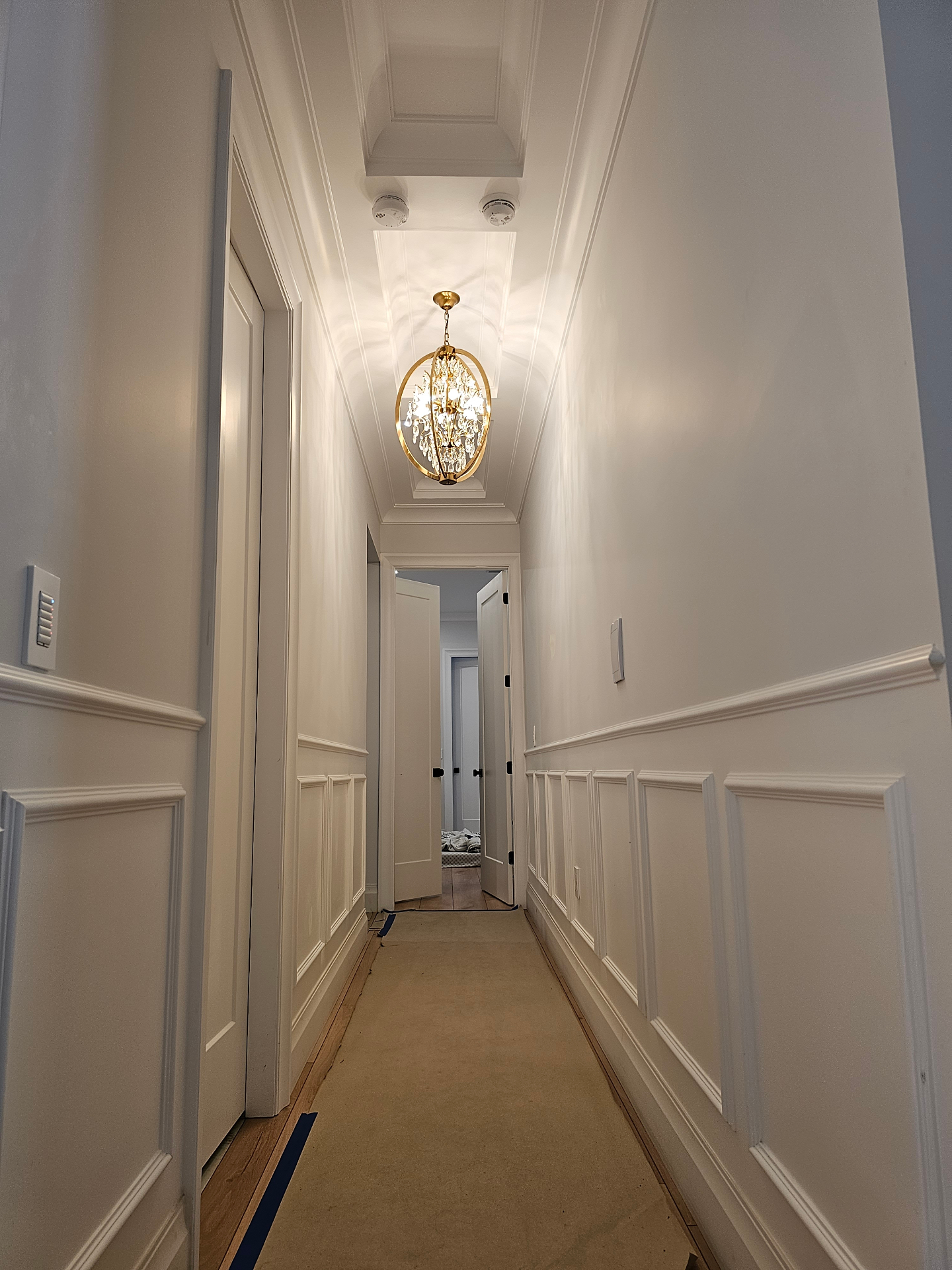
Finish Carpentry
Finish Carpentry vs Rough Carpentry: What's the Difference?
Rough carpentry is the structural framing hidden inside walls, floors, and roofs; finish carpentry is the visible woodwork installed after drywall — trim, casing, baseboards, stairs, cabinetry, and built-ins. Rough carpentry is measured in structural tolerance, finish carpentry in fractions of a millimetre.
Rough carpentry is the structural skeleton of a building — framing, sheathing, roof trusses, subfloors. Finish carpentry is everything you actually see and touch — trim, crown molding, baseboards, casing, cabinets, stairs, and built-ins. Different tools, different tolerances, different mindset.
Rough carpentry: built to be hidden
A rough carpenter builds the parts of a house that drywall covers up. Tolerances are measured in eighths of an inch. The goal is structural integrity, code compliance, and speed.
Typical rough work includes:
- ·Wall framing (2×4 and 2×6)
- ·Floor joists, beams, and subfloor sheathing
- ·Roof trusses and rafters
- ·Window and door rough openings
- ·Stair stringers (the structural part, not the treads you see)
Finish carpentry: built to be seen
Finish carpentry is the opposite. Tolerances are measured in 32nds — sometimes 64ths — of an inch. Gaps show. Reveals matter. The crown has to land on a flat ceiling that isn't actually flat.
Typical finish work includes:
- ·Crown molding, baseboards, and trim
- ·Door and window casing
- ·Wainscoting, panelling, and shiplap walls
- ·Custom cabinets and built-ins
- ·Stair treads, risers, handrails, and newel posts
- ·Fireplace mantels and surrounds
Why the distinction matters
Hiring a great rough carpenter for finish work — or a great finish carpenter for framing — usually disappoints. The skills don't fully transfer.
At Right Group Construction, we're a finish-first company. We collaborate with framers and structural trades, but our craft is the precision work that makes a finished home feel resolved.
Planning a project? Get a free quote — we'll tell you honestly whether the work is in our wheelhouse.
Frequently Asked
Questions we get asked
What is the difference between finish carpentry and rough carpentry?
Rough carpentry builds the hidden structure — framing, sheathing, joists, and blocking — while finish carpentry installs the visible woodwork such as trim, casing, baseboards, stairs, and built-ins. Rough work is judged on strength, finish work on appearance and tolerance.
Which costs more, finish or rough carpentry?
Finish carpentry usually costs more per hour and per linear foot because it demands tighter tolerances, higher-grade materials, and slower, more precise installation. Rough carpentry moves faster and uses cheaper structural lumber.
Can the same crew do both?
Some crews do both, but most high-end projects use a dedicated finishing crew because the tooling, skills, and pace are different. Specialised finishers deliver cleaner mitres, tighter scribes, and fewer callbacks.
When does finish carpentry happen in a renovation?
Finish carpentry starts after drywall, priming, and often flooring are complete, and it is typically the last trade on site before painting touch-ups and final cleaning.